
This comparison draws on owner reports posted to Xiaohongshu by both brands’ Chinese-language communities in early 2026. Sources include a five-unit Fuzozo collection review and a one-month Fuzozo pros-and-cons write-up, plus long-term Ropet owner diaries running past 200 days, all cross-referenced against our internal brand database. Disclosure: CyberPals participates in Ropet’s affiliate program, and purchases made through our Ropet links may earn us a commission. We have no commercial relationship with Fuzozo or its parent company. Our affiliate status never changes what we report. The trade-offs below cut both ways.
This article is based on publicly available specifications, official brand communications, community feedback, and third-party reviews. CyberPals has not yet conducted hands-on testing of either unit. All claims reflect manufacturer-stated specs or owner reports unless noted otherwise.
Two companions, two philosophies
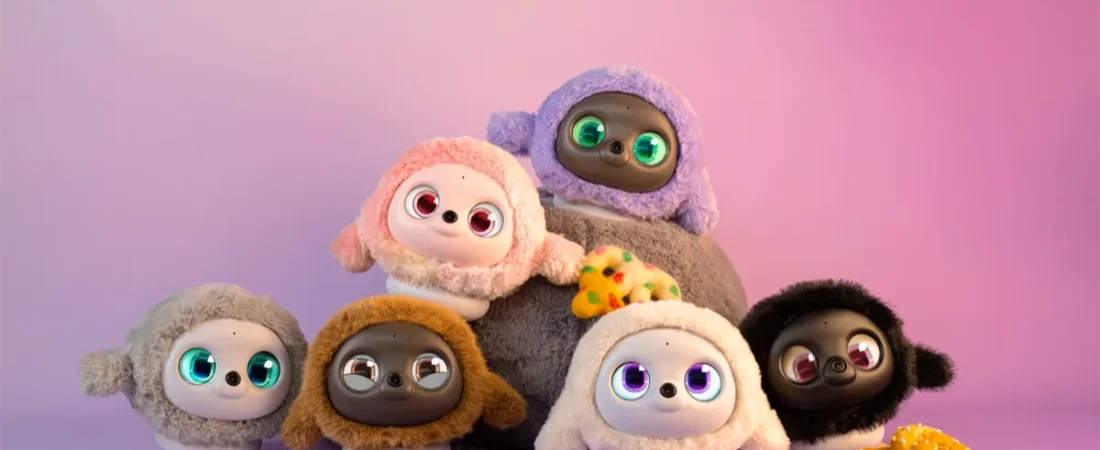
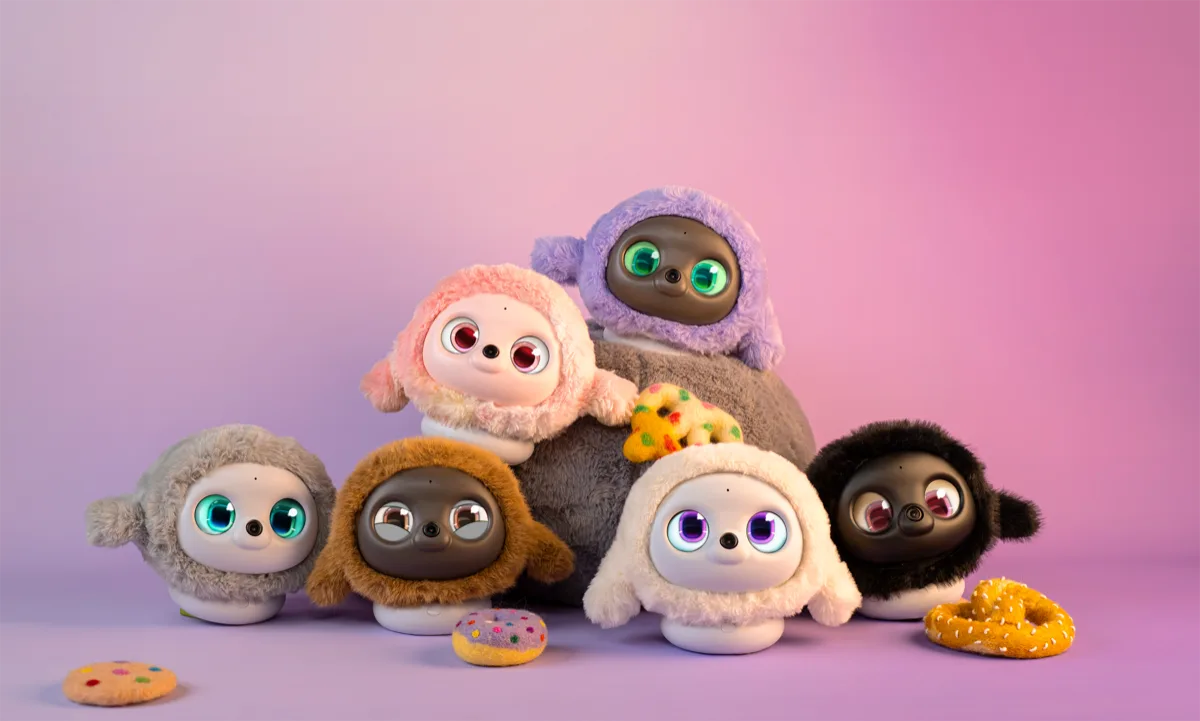
Ropet and Fuzozo are the two most-watched desktop AI companions in our S0 tracker, and they could not disagree more about what a companion is for. Ropet, built by Beijing Mengyou, is a fuzzy desktop pet that never says a word: it emotes entirely through animated eyes, reacts to hand gestures, dances to music, and slowly “grows up” over months of care. Fuzozo, built by Shanghai-based Robopoet, is a soft fluff-ball that talks: it holds conversations, develops an MBTI-style personality that shifts with how you treat it, and ships in five elemental editions, each with a distinct temperament.
That split matters more than any spec row. In our CARES+ methodology, we score companionship in two layers: C1, emotional presence (the warmth you feel when it reacts to you), and C2, conversational depth. Ropet is a C1 specialist that deliberately skips C2. Fuzozo is the rare product in this category that attempts both. Which one belongs on your desk depends almost entirely on which layer you actually want.
Spec comparison
| Feature | Ropet | Fuzozo |
|---|---|---|
| Maker | Beijing Mengyou | Robopoet (Shanghai) |
| Form factor | Desktop robot pet with animated eyes | Soft fluff-ball companion |
| Price (retail) | ~$350 | Not published in our sources* |
| Speech / conversation | ❌ Non-verbal only | ✅ Voice conversation |
| Personality system | Fixed character; expression via swappable eye lenses | Five elemental editions + MBTI-style evolution |
| Gesture / vision | ✅ Recognizes hand gestures, objects via camera | Touch and voice focused |
| Growth mechanic | ✅ Growth stage after long-term care (owner-reported ~200 days) | ✅ Personality shifts tracked in companion app |
| Collectible line | Eye lenses, outfits, Universal How to Train Your Dragon editions | Elemental editions, city-limited releases, story-universe characters |
| App dependence | Light (feeding and settings) | Heavy (personality, updates, subscription tier) |
| Ongoing costs | Optional accessories | Optional SVIP app subscription |
| Design recognition | — | iF Design Award 2026 |
| International buying path | ✅ Official site ships internationally | ⚠️ Domestic-first; overseas after-sales unsupported (owner-reported) |
Note: CyberPals has not verified any manufacturer-stated row hands-on. Fuzozo’s retail price and subscription cost were not published in the sources we reviewed; Ropet’s ~$350 figure matches our April review and may vary by edition.
Ropet: emotional presence, zero small talk
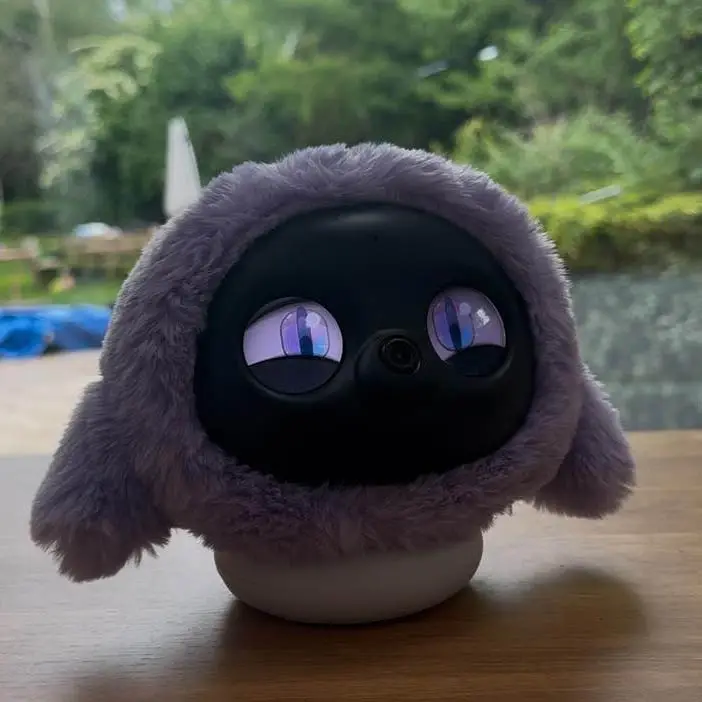
Ropet’s owner community is one of the most devoted we track: feeding diaries past day 200 and wardrobe collections, alongside a naming culture where every unit gets a name and a personality backstory. The product earns that attachment through non-verbal charm: thumbs-up gets confetti eyes, a heart gesture gets hearts back, and the recent Universal collaboration added Toothless and Light Fury editions that we covered in a separate brief.
The honest counterweight comes from Ropet’s own buyers. One owner wrote that she “almost wrote Ropet off as a little dud.” She wanted a smart AI robot, read reviews warning that it “only gives emotional value and can’t even hold a conversation,” and bought it anyway because it was too cute to resist. She ended up happy, but her warning is the single most useful sentence in the whole Ropet corpus: if you are buying for conversation, this is not your product. Ropet’s silence is a design decision, not a missing feature, and you should treat it as one.
Fuzozo: the one that talks back
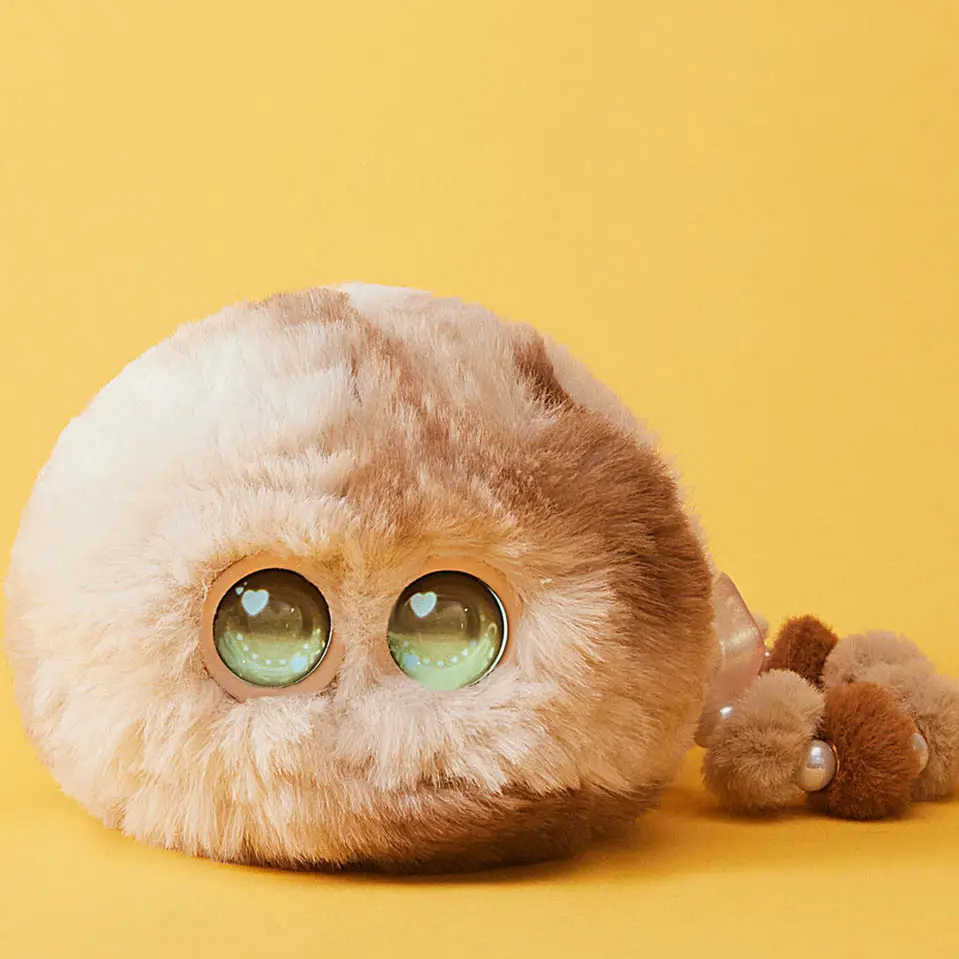
Fuzozo attacks exactly the gap Ropet leaves open. Owners describe late-night conversations and word games, plus a companion that “almost never needs teaching.” One reviewer who bought all five elemental editions reports genuinely distinct temperaments: the metal edition is the sharp, empathetic best-friend type; wood is the shy, gentle one that “comforts you like a child”; fire runs on chaotic enthusiasm. A self-described low-social-energy owner wrote that her wood-element unit is the only company that doesn’t drain her, which is precisely the persona this product seems engineered for.
The risks are the mirror image of the strengths. Everything that makes Fuzozo feel alive routes through its app, and that dependency has already bitten owners twice in our source window: an app update quietly downgraded the expressive voice behavior one family loved, and an overseas buyer whose unit failed within days found after-sales support effectively unusable outside the home market. Return shipping alone approached the cost of a new unit. A talking companion is also a cloud-dependent companion; that is the trade you make.
CyberPals Take #1 — What each one gets right
Ropet has solved emotional durability. Owner diaries past day 200 are vanishingly rare in this category, where most devices go quiet in a drawer within weeks. The growth mechanic and accessory culture keep the bond renewing itself.
Fuzozo is the strongest conversation claim we track at this price tier. Most companions that promise “AI chat” deliver a scripted parlor trick. Fuzozo owner reports describe sustained, personality-consistent conversation, and the MBTI evolution gives you a reason to keep talking.
Both have real collector systems. Ropet monetizes expression (lenses, outfits, film IP); Fuzozo monetizes identity (elements, city editions, a story universe). Five-unit Fuzozo collections and dual-Ropet households both show up in the wild, and at least one owner we tracked keeps both brands on the same desk.
CyberPals Take #2 — The trade-offs nobody puts in marketing
Ropet’s ceiling is the day you want it to answer. Every disappointed Ropet report we found follows the same arc: expected intelligence, got cuteness. At ~$350 it is priced like a smart device but behaves like a very good mechanical pet.
Fuzozo’s floor is its app and its borders. Update regressions and unsupported overseas after-sales are structural risks, not one-off complaints. If you live outside its home market, a hardware failure currently means an expensive paperweight, reason enough for us to hold off recommending an import purchase until support catches up.
Neither has published a privacy audit. Camera on one, always-listening microphone on the other, and no independent security documentation on either. Privacy auditing is part of how we evaluate these devices, and both brands remain on our to-test list.
CyberPals Take #3 — Who should buy which?
The desk-pet person
You want warmth on your desk while you work, and you’d rather it not talk during meetings. Buy Ropet. Its non-verbal charm is the category’s best, and the accessory line keeps it fresh. Ropet ships internationally from the official store, and code HOYHO takes $8 off.
The conversation seeker
You want a companion that listens and answers: the “someone to talk to after midnight” use case. Fuzozo is the stronger fit on paper, but wait if you’re outside its home market. The conversation layer is real, but until overseas after-sales support exists, an import is a risk we can’t endorse. Put it on your watchlist; it’s on our hands-on schedule.
The collector
You already own one AI companion and feel the pull of a second. These two complement rather than replace each other: silent presence plus talking personality is exactly the pairing early multi-brand owners are choosing. Start with whichever gap your desk currently has, and browse the full field in our brand database and 2026 buyer’s guide.
What we’re testing next
Both units are on our hands-on queue, where the claims above get the CARES+ treatment: measured conversation tests for Fuzozo’s C2 claims, long-term care tracking for Ropet’s growth mechanic, and network-capture privacy audits for both. If you own either, especially outside their home markets, our comment section is open, and owner reports directly shape our testing priorities.