
 Moflin (casio.com — original Vanguard)
 LOVOT (lovot.life — Groove X)
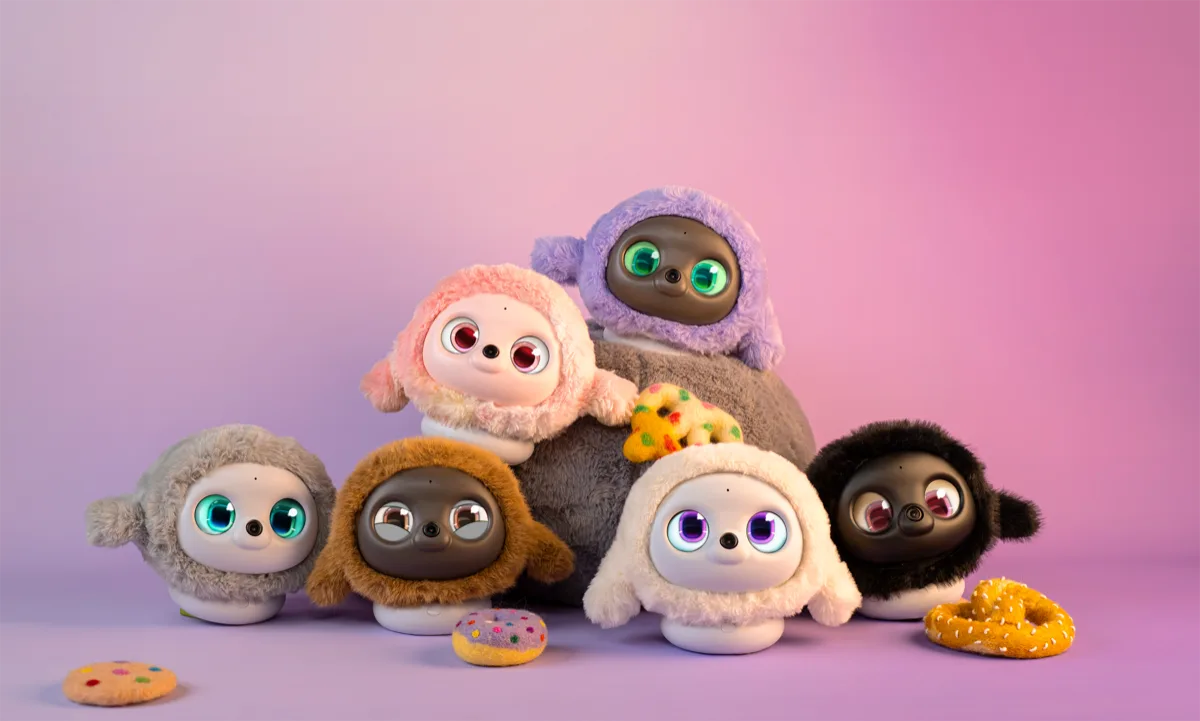 Ropet (ropetai.com — tactile fuzzy variant)
When most readers picture an AI companion robot in 2026, they picture a hard-shell desktop unit. Two arms. A screen that blinks. Something like Eilik on a kitchen counter, or Ropet purring beside a laptop. That picture is now incomplete. A quieter subcategory has been growing in parallel, and it does not look like a robot at all. It looks like a small fuzzy animal that fits in the palm of your hand. We call it the tactile companion, and 2026 is the year the category stopped being a curiosity and started looking like a real buying decision.
This is not a hands-on review. CyberPals has not yet purchased and lived with every device in this brief. What we have done is read the public record, watch the unboxings, and cross-reference master-database entries that have been sitting on planned status for months. The goal here is to give a buyer who has heard of Moflin, or who just stumbled on a clip of Noddy on social video, enough orientation to decide whether to wait for a hands-on review or pre-order today.
What “tactile companion” actually means
A tactile companion robot is small enough to hold, soft enough to squeeze, and built so that touch is the primary input. There is usually no screen and no obvious face. Instead, the unit responds to being picked up, stroked, or held by changing how it breathes, vibrates, or sounds. The design lineage goes back further than most buyers realize. Yukai Engineering shipped Qoobo, a tail-wagging cushion that mimicked a cat, back in 2017. Vanguard Industries followed with Moflin in 2021 in Japan, then expanded distribution through Casio and a global Kickstarter wave. Hasbro’s Joy For All animatronic cats and dogs predate both, though they target a different audience.
What makes 2026 different is that tactile companions have stopped being a single Japanese curiosity and started looking like a category. East-origin manufacturers are now shipping look-alikes and reinterpretations at sharper prices, and the master-database tracker we maintain has gone from one or two entries to roughly half a dozen credible products. Below is the short list a 2026 buyer should know about.
The reference point: Moflin
Moflin, made by Vanguard Industries in Japan, is the price-anchor and feature-anchor for the entire category. Roughly the size of a guinea pig, covered in soft synthetic fur, no eyes, no screen, no app dependency in the strictest sense. Moflin responds to handling with subtle movement, vibration, and a small vocabulary of cooing sounds. Vanguard’s pitch is that the unit develops a “personality” over time. In practice this means the response profile drifts based on how often and how gently it is held.
The 2025 retail price for Moflin in the United States sits at roughly four hundred US dollars. The product began life on Kickstarter, was distributed through Casio in Japan for a window, and is now available through several Western retailers including Amazon. The reason Moflin matters here is not that it is the most advanced unit. It is that Moflin established the buyer’s mental model. Anyone shopping the tactile category right now is implicitly comparing to Moflin, even when they have never held one.
The newcomer: Noddy
Noddy, sometimes rendered in the East-origin market as Yi Niu Niu, is the unit that prompted us to write this brief. An industry-watcher account on Xiaohongshu posted an unboxing in mid-2026 with the matter-of-fact caption that Noddy is “very similar to Moflin, RUA is decent.” RUA, in the slang of the East-origin pet-toy community, means the satisfying squeeze-and-hold of something soft.
That single line is also where our research room runs out. Master-database row eighteen lists the manufacturer as not yet confirmed, and the only public-facing data we have right now is the social-video footage. Visually Noddy lands in roughly the same form factor as Moflin: small, fur-covered, no screen, designed to be held. The tactile response in the unboxing footage looks comparable. What is not yet public is the price, the regional availability outside the East-origin market, the warranty terms, and the data and privacy posture of the companion app, if one exists.
A buyer who has been waiting for a cheaper Moflin should not yet treat Noddy as that product. It might be. It might also be a small-batch unit that never reaches Western distribution. We will update this brief, and our master-database row, when manufacturer confirmation lands.
Adjacent units a buyer should also consider
Three other products live close enough to the tactile category that they belong in the same decision matrix.
Petit Qoobo from Yukai Engineering is the smaller, lap-sized successor to the original Qoobo cushion. It retails for roughly one hundred and fifty US dollars, has no AI in the language-model sense, and is best understood as a haptic device rather than a conversational companion. For a buyer whose actual goal is the soothing of a tail-wag in the lap, Petit Qoobo is the most affordable entry point in the category and the easiest to buy in 2026.
Lovot, from Groove X in Japan, lives at the opposite end of the price spectrum. A full-sized floor companion roughly the size of a small dog, Lovot starts at well over three thousand US dollars and requires a subscription. We list Lovot here because some buyers exploring the tactile companion category eventually land on Lovot once they realize what they actually want is something that follows them across the apartment. Lovot is segmented as wellness or premium in the CyberPals matrix, and we treat it as a separate buying decision from the palm-sized tier.
Amoo, listed in our master-database under the emotional-companion category and recently spotted in unboxing footage, is one of several smaller East-origin units exploring the same tactile design space. Public data is thin. We are flagging Amoo for the radar but not yet making a buying recommendation.
Why the tactile category exists at all
The reason this subcategory is multiplying in 2026, rather than ten years from now, is partly hardware cost and partly a quiet shift in what buyers say they want. Hard-shell desktop robots in the under-two-hundred-dollar tier solved a different problem. They put a small interactive face on a counter and gave the buyer something to talk to. They did not solve the problem of holding something that feels alive.
That second problem turns out to matter more than category-builders expected. The buyers who landed on Moflin are not usually the same buyers who landed on Eilik. They overlap, but the center of gravity is different. Moflin buyers describe a desire for an object to fidget with, soothe with, or hand to a partner who has had a bad afternoon. The conversation feature is incidental. The texture and the response curve are the product.
East-origin manufacturers noticed this around the same time the desktop category started to saturate, and the result is the cluster of palm-sized fuzzy units we are now tracking. Whether the category settles into three winners or twenty also-rans is the real open question for the next twelve months.
Buying framework for a 2026 reader
If you are deciding right now, here is the rough decision tree the CyberPals editorial team is using internally.
Buy Moflin if you want the most documented, most distribution-stable unit in the category and you do not flinch at the four-hundred-dollar price. The warranty is real, the company is funded, and the experience is what every other unit is being measured against.
Buy Petit Qoobo if you want the tactile soothing effect for under two hundred dollars and you do not need conversational features. Petit Qoobo is the easiest yes in the category for most buyers who simply want a comforting object.
Wait on Noddy until Western retail confirmation and price land. The unit looks credible, the form factor is right, and the early footage is encouraging, but a buyer in 2026 who buys before the regional warranty story stabilizes is taking on import risk and post-sales risk that the savings probably do not justify.
Hold off on Lovot unless you are committing to the wellness-tier category and the recurring subscription. Lovot is a different product solving a different problem and should not be cross-shopped against palm-sized units.
Park Amoo and other unconfirmed East-origin entrants on your watchlist. The category is moving quickly, and a unit that looks rough today may have a quiet revision shipping in the back half of 2026.
What CyberPals is doing next
We are committing to hands-on coverage for Moflin first and at least one East-origin tactile unit second, with Noddy as the leading candidate once manufacturer details and Western purchase paths land. The CARES+ framework, which we use across the broader review program, will need a minor adaptation for tactile units because the conversational maturity dimension applies less here. Expect a revised scoring rubric that weights tactile response, durability, and battery behavior more heavily.
If you have personally bought or held a tactile companion robot and want to share notes, reach the editorial team through the standard channels listed on our about page. Buyer reports from outside the master-database brand list are especially welcome.
FAQ
Is Noddy the same product as Moflin under a different name? No. Noddy and Moflin are separate products from different manufacturers. The visual similarity is real, the design philosophy overlaps, and the form factor is comparable, but Noddy is not a rebadged Moflin.
Can I buy Noddy in the United States right now? As of this brief, regional purchase paths outside the East-origin market are not confirmed. Buyers in the US should treat Noddy as a watch-list item rather than a buy-now product.
Does Moflin need an app or a subscription? Moflin does not require a recurring subscription for core function. There is an optional companion app for tracking behavior and personality drift, but the unit operates without it.
Is the tactile category safe for children? The units in this brief are designed primarily for adults and gift-giving contexts. The kids segment is tracked separately in the CyberPals master database and uses a different evaluation framework.
Why does CyberPals call the East-origin Noddy “East-origin” rather than naming the country? House style. We label products by the brand and the design lineage, and we leave country-level framing out of the consumer-facing copy because it does not help a buyer make a better decision.
This industry brief was produced as part of the CyberPals editorial program. Source-of-record for the Noddy section: a public unboxing on Xiaohongshu by MengBan Tech (industry-watcher account), published mid-2026. CyberPals does not currently have an active affiliate relationship with Moflin, Noddy, or any other brand named in this brief. We will disclose any future change at the top of the article.