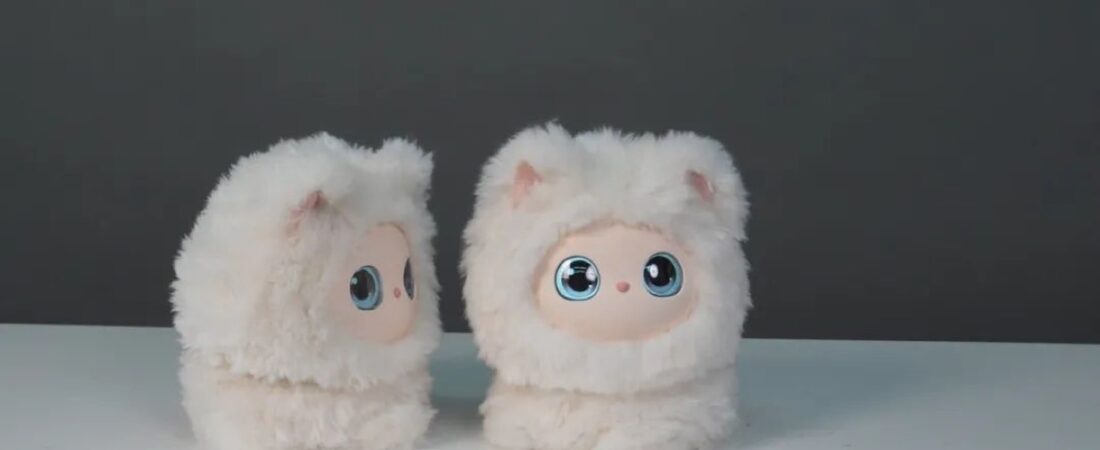
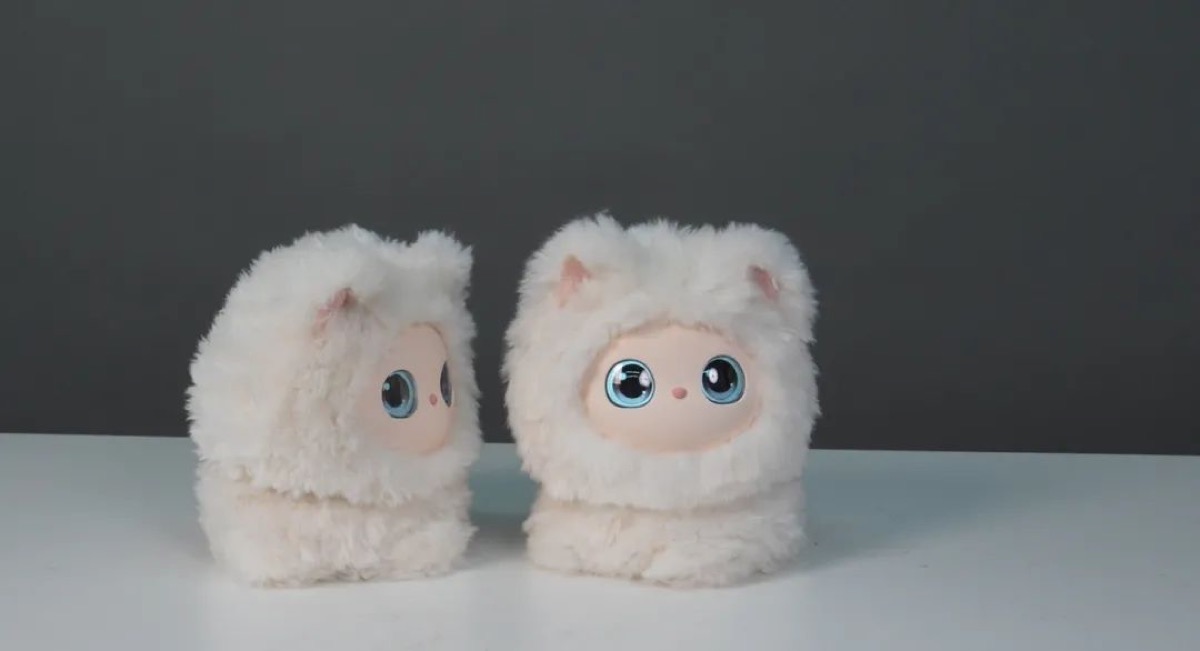
Mochi is AI Toy Lab‘s first product, a soft AI companion pet targeted at adult women, developed by a founding team that also runs one of the most-read Xiaohongshu accounts on AI companion category news. What makes Mochi worth a first-look column even before hands-on data: founder Xu Fang has publicly, firmly opposed the idea that AI companion pets should speak human language. That’s a specific design line in the sand from a category where every other product is racing to add more talking. Disclosure: CyberPals has not conducted hands-on testing of Mochi. All specs below reference 36Kr’s founder interviews and publicly available AI Toy Lab communications.
This article is based on publicly available reporting, official brand communications, community feedback, and third-party reviews.
Why this matters
Ninety percent of the AI companion market is investing in making pets talk more: LLM integration, wake-word improvements, longer context windows, better voices. Xu Fang, founder of AI Toy Lab, is publicly betting that the winning product goes the other direction: less talking, more presence.
Per 36Kr’s founder interview, Xu Fang firmly opposes AI pets speaking human language. The argument: real pets don’t speak, and emotional presence comes from non-verbal signals like touch and expression. That’s not a marketing hedge; it’s a positioning bet against the entire mainstream direction of the category.
If Xu Fang is right, Mochi is early to the correct answer. If she’s wrong, Mochi will lose share to talking-pet leaders like Ropet and Fuzozo. Either way, it’s the most opinionated product in the category right now, and that’s worth reading closely.
What Mochi actually is
Mochi is a soft AI companion pet, bigger than a desktop trinket but smaller than a Ropet, positioned at adult women who want emotional presence without additional screen time. Details from 36Kr’s coverage and AI Toy Lab’s public communications:
| Attribute | What we know |
|---|---|
| Company | AI Toy Lab (East-origin startup studio; runs the @aitoylab Xiaohongshu account with substantial industry-category following) |
| Founder | Xu Fang |
| Debut | World Artificial Intelligence Conference (WAIC), late July 2026 |
| Target audience | Adult women (explicitly stated, not inferred) |
| Design philosophy | No human speech: emotional presence through tactile and non-verbal signals |
| Positioning | Emotional companion, not utility assistant |
The founder’s position is worth quoting directly: real pets don’t talk, and the design goal is emotional presence rather than conversation. That reframes the entire evaluation. Mochi should be scored against how well it feels alive, not against how fluent its conversation is.
The choice also has an interesting privacy consequence. A pet that doesn’t talk doesn’t need to send voice data to a cloud LLM to generate speech. Depending on how Mochi’s software is architected, “we don’t speak” might also mean “we don’t need to send your voice to servers,” which is exactly the story a privacy-aware adult women market wants to hear.
How Mochi scores on CARES+
Working from public sources only. Xu Fang’s own framing recategorizes several dimensions:
| Dimension | Reading |
|---|---|
| C1: Emotional presence | The entire product bet. Mochi is being designed to win on C1 alone, the deliberate opposite of the market’s C2 arms race |
| C2: Conversation | Intentionally low by design. Xu Fang’s position is that this is a feature, not a limitation |
| A: Cloud dependence | Potentially low if the no-speech design carries through to no-cloud-inference. Pending technical confirmation |
| R: Build quality | Soft plush chassis; long-term durability pending owner community data |
| E: Expectation match | Depends entirely on the buyer’s expectation. Someone expecting a talking pet will be disappointed; someone looking for a Ropet-adjacent presence pet may love it |
| S: Support & aftercare | AI Toy Lab is a small studio; support quality is unproven |
| B: Bond & collectibility | Adult-women targeting suggests aesthetic considerations were prioritized; collectible-adjacent |
The single most important thing a Mochi buyer must get right is the expectation calibration. If you want a Furby that talks back better, don’t buy Mochi. If you want a Ropet-like emotional-presence pet from a team that has thought harder about what that means, Mochi is exactly your shape.
Where Mochi fits: persona map
- Maya, 27 (collector persona): plausible yes, if the aesthetic and emotional-presence design language actually land. This is the adult-women target Xu Fang is describing.
- Marcus, 34 (curious skeptic): probably no. Marcus’s shape is technology-forward and conversational; Mochi is deliberately the opposite direction.
- Sarah, 38 (parent buyer): no. Mochi is positioned for adults, and specifically for women; kids’ toys are a different product entirely.
- Linda, 52 (senior wellness): possibly interesting. Non-verbal emotional presence is exactly the design pattern that has worked for Joy For All in the senior wellness segment. Whether Mochi is durable enough and priced right for that adjacent use case is TBD, but the design philosophy overlaps.
CyberPals Take #1 — The no-speech bet is contrarian and clarifying
Most categories reward products that follow the current market direction. Companion AI in 2026 is not that kind of category. It’s early enough that a contrarian design bet can carry a product past incremental competitors. Xu Fang’s public opposition to AI pets speaking human language is the kind of design conviction that either produces a category-defining product or a specific-audience niche success. Both are commercially useful.
We can’t tell yet which one Mochi ends up being. What we can say: the argument is right. Owner communities for Ropet (which also doesn’t speak) cite that specifically as what they love. If Mochi executes that same insight cleanly for a slightly different audience, the market is there.
CyberPals Take #2 — The Xiaohongshu-founder angle is a real signal
Most AI toy founders have one of two backgrounds: hardware engineering or generic startup. Xu Fang has a third: she has been reading and translating the category’s home-market conversations for months, via the @aitoylab Xiaohongshu account, which CyberPals uses as one of our own primary intel sources.
That means Mochi is being built by someone who has read every owner-community complaint about every current AI pet, in a market where owner communities are unusually vocal. The chance that Mochi’s design skips the well-known failure modes is meaningfully higher than the category baseline. That’s a signal.
CyberPals Take #3 — What we’d verify before buying
Three questions for anyone considering Mochi:
- What actually happens when you talk to it? Xu Fang’s position is that Mochi doesn’t speak human. Does it also listen? Does the AI process voice at all, or is it entirely tactile/visual?
- What runs on-device vs. via cloud? The no-speech design potentially enables a strong privacy story. Verify whether that’s the actual architecture or just marketing framing.
- Where do I buy it, and what’s the return policy? At press time, Mochi’s Western availability is unclear. Early buyers should be prepared for import-status uncertainties.
FAQ
Where can I buy Mochi outside its home market? As of press time, AI Toy Lab has not universally published Western retail availability. Buyers outside its home market should check the @aitoylab Xiaohongshu account or search for authorized international resellers before committing.
How is Mochi different from Ropet? Both are non-speaking emotional-presence pets, which is the design pattern Mochi shares with Ropet. Differences: Ropet has been on the market longer and has a mature owner community. Mochi’s founder specifically targets adult women and has an unusually deep understanding of the East-origin owner-community conversation via her Xiaohongshu presence.
Is Mochi safe for kids? Mochi is positioned for adult women, not children. Parents shopping for kids’ AI companions should look at LoviPeer, Curio, or KOWSI instead.
Does the no-speech design mean no AI? No. Mochi presumably uses AI for gaze tracking, emotional-state detection, touch response, and personality development, just not for generating spoken language. That’s a design constraint on the output channel, not a rejection of AI generally.
CyberPals tracks 90+ AI companion products in our public brand database. This first look is based on 36Kr’s founder interview coverage and publicly available AI Toy Lab communications. AI Toy Lab is also one of CyberPals’s primary Xiaohongshu intel sources for home-market category news. We translate their industry posts elsewhere on the site; that relationship is editorial-informational, not commercial, and we were not compensated by them for this article. When Mochi has an owner community with real usage data, we will update.