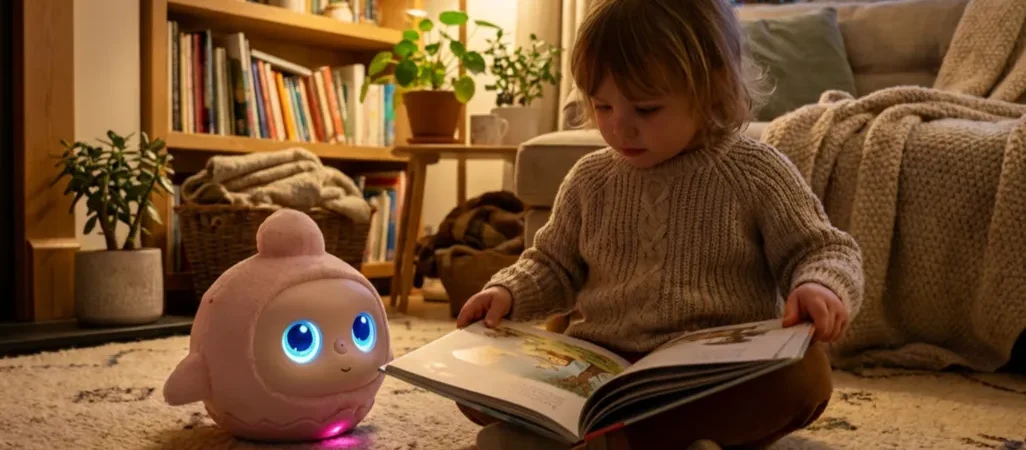
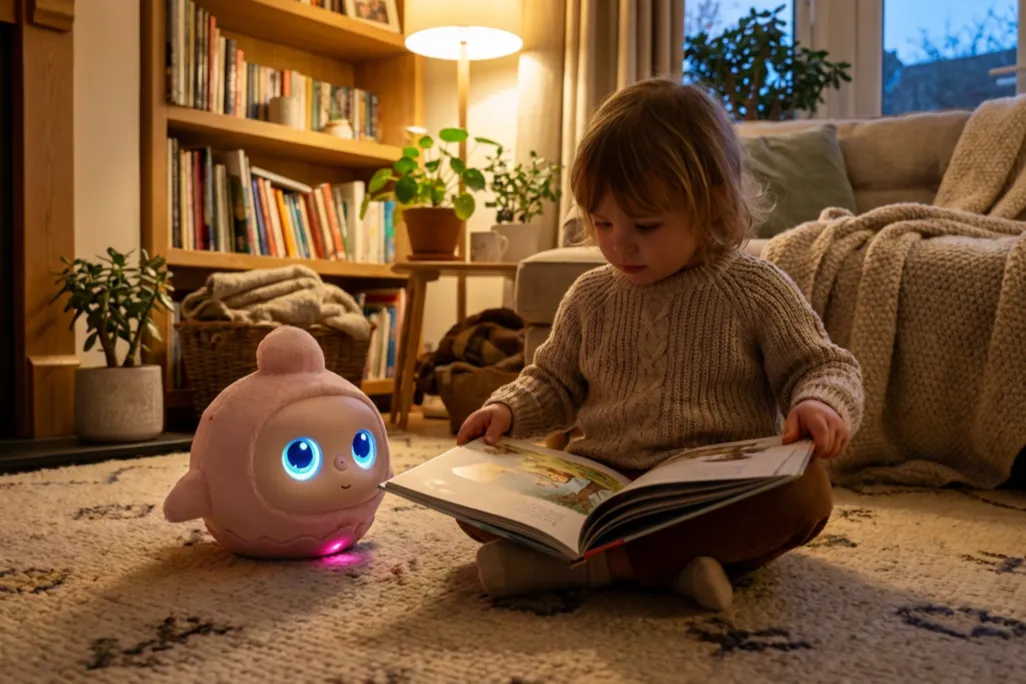
LoviPeer (technically loviPeer Pro for the 2026 SKU) is the AI kids companion robot that beat Dell and Samsung, along with other international-tier competitors, at CES 2026 to take home Techaeris’s official CES 2026 Best Product Award. Its East-origin parent brand LOVEAXI is positioning it as a Wirecutter-grade answer to “the AI toy my kid keeps asking for” without the passive-response failure mode that has quietly killed the category’s first two waves. Disclosure: CyberPals has not conducted hands-on testing of LoviPeer. All specs and claims below reference LOVEAXI’s official communications and CES 2026 press coverage.
This article draws on publicly available reporting and official brand communications, plus community feedback and third-party reviews.
Why this matters
The kids AI toy category has one big unsolved problem: most of them are boring after week one. A talking plush answers questions until the child runs out of questions, then it sits on the shelf. LoviPeer’s design pitch, “active interaction plus emotional companionship,” is exactly the language you use when your product team knows about the boredom cliff and thinks they’ve solved it.
The Techaeris CES 2026 Best Product coverage and the LOVEAXI winners announcement give three technical hooks the company thinks matter: sound-source localization (“hearing-based positioning”), biological-grade visual focus tracking, and proactive engagement rather than passive response. If those hold up in a real living room, LoviPeer is the first kids AI toy that’s actually trying to solve the retention problem instead of the launch problem.
What LoviPeer actually is
LoviPeer Pro is Loveaxi‘s flagship kids AI companion robot: a soft plush chassis with embedded interactive electronics and a paired mobile app. Per Techaeris’s CES 2026 hands-on, it shows a demonstrably more active engagement style than the “wait for the kid to speak” default that has defined the category.
Key positioning per LOVEAXI’s press materials and Techaeris CES 2026 write-up:
| Design element | Loveaxi’s claim |
|---|---|
| Active interaction | Robot initiates engagement rather than waiting for kid input |
| Sound-source localization | Detects direction of speech, turns toward the speaker |
| Biological-grade visual focus | Camera + gaze tracking that follows a moving child |
| Emotional companionship | Positioning language centers empathy, not utility |
| Target age | Children (specific age band not universally published; treat as 3–10 pending confirmation) |
| Parent controls | Standard for the category: app-mediated, exact scope pending confirmation |
The CES 2026 Best Product Award context matters: Techaeris judged against Dell and Samsung entries in the same show, per LOVEAXI’s PR. That’s a real signal even after normalizing for the marketing amplification any award produces.
How LoviPeer scores on CARES+
Working from public sources, with a heavier-than-usual “pending hands-on” caveat because kids AI toys’ real behavior in a real home is what actually matters:
| Dimension | Reading |
|---|---|
| C1: Emotional presence | Strong marketing intent; hands-on validation pending |
| C2: Conversation | Positioning suggests real conversation, not sound-effect responses. Model / language details pending |
| A: Cloud dependence | Unknown from public materials, and the most important answer for parent buyers |
| R: Build quality | Soft plush + electronics, with standard failure modes (wear, wash concerns, connector fatigue) |
| E: Expectation match | “Active engagement” is a specific, testable claim. Buyers should verify in-store or during return window |
| S: Support & aftercare | Loveaxi is an established East-origin kids’ AI-toy brand; support quality is unproven in Western markets |
| K: Kid safety | Highest-priority open question. What data is captured? Where does it go? Who can access it? |
| B: Bond & collectibility | Not the point: this is a functional product, not a collector line |
Where LoviPeer fits: persona map
- Sarah, 38 (parent buyer): this is her primary target. If active-engagement claims hold up and privacy story is clean, LoviPeer is a serious contender for the family gift budget.
- Maya, 27 (collector persona): no, kids’ AI toys are not her space.
- Marcus, 34 (curious skeptic): could be interesting as a technology-watching angle, but not a buying persona.
- Linda, 52 (senior wellness): no. LoviPeer is designed for children, not older adults; Joy For All and ElliQ are the right products for that use case.
CyberPals Take #1: The award is a signal, not a purchase decision
CES Best Product awards are worth paying attention to, but they measure “impressed a room of industry judges in a controlled demo,” not “worked for six months in a real family’s home.” The gap between those two is where most AI toys die.
What LoviPeer’s award-winner status tells us is that Loveaxi’s engineering team knows the category’s genuinely hard problems (retention, active engagement, gaze tracking) and thinks they’ve made progress. What it doesn’t tell us is whether that progress holds up outside the demo booth. Parents should treat LoviPeer as a strong contender to test, not as a proven answer.
CyberPals Take #2: The active-interaction claim is the whole ballgame
Every kids’ AI toy the market has produced has claimed to be “engaging.” The specific way LoviPeer’s marketing centers the robot initiating interaction is different. That’s the actual behavior parents want and the actual behavior that survives the boredom cliff.
If LoviPeer really does this (turns toward a kid who walks in the room and offers an opener, then follows up on the last conversation), it’s a category leader. If it does the “sound effect when picked up” thing but calls it active interaction, it’s another shelf ornament. This is one of the specific behaviors we’d want to verify hands-on before recommending, and we’ll update this piece when we do.
CyberPals Take #3: Kid-safety questions parents should ask first
Three questions to get answered before adding LoviPeer to a shopping cart:
- What data is captured? Where does it live, and who can access it? Especially critical for products with camera + microphone + child voice logs.
- Does LoviPeer work offline? If the device is bricked without Loveaxi’s cloud, that’s a durability risk on a category-appropriate five-year time horizon.
- What’s the subscription structure at year two? Kids’ AI toys frequently sell hardware cheap and price content and personality via app tiers. Ask before, not after.
FAQ
Is LoviPeer available outside its home market? LOVEAXI is expanding globally following the CES 2026 award. Availability varies by region; check LoveAxi.com for current shipping regions before committing.
How is LoviPeer different from Curio or KOWSI? Curio is US-based, screen-free, no-subscription, with the Grimes creative partnership. KOWSI is a weighted-plus-heated therapeutic line that also does AI interaction. LoviPeer is a full-active-interaction plush from a category-experienced East-origin team. Different design philosophies, all real products.
Is LoviPeer safe for a 4-year-old? Age-appropriateness depends on final product configuration. LOVEAXI has not universally published a specific age recommendation across regions. Parents should check the label of the specific SKU sold in their region and confirm parent controls match their standards before purchase.
What’s the price? LOVEAXI has not universally disclosed international pricing. CES 2026 coverage did not commit to a specific USD MSRP. Buyers should treat the retail price as TBD pending Western launch.
CyberPals tracks 90+ AI companion products in our public brand database. This first look is based on Loveaxi’s official communications, the Techaeris CES 2026 Best Product Award coverage, and independent press reporting. We have no commercial relationship with Loveaxi and were not compensated by them for this article. When LoviPeer ships internationally and parent-community feedback forms, we will update this piece with hands-on and durability observations.